Hiring for skills or for the ability to learn? Three lessons for industry
When an industrial role stays vacant, the instinct is to add more requirements. What if the opposite were needed? At the L’Élan Vert l’Industrie trade show, a talk on human capital put three questions back at the centre: what should you really require from a candidate, what can you teach them, and how do you keep know-how within the company? Here is what we took away, and how we concretely support companies on each of these issues.
An industry facing a double deficit
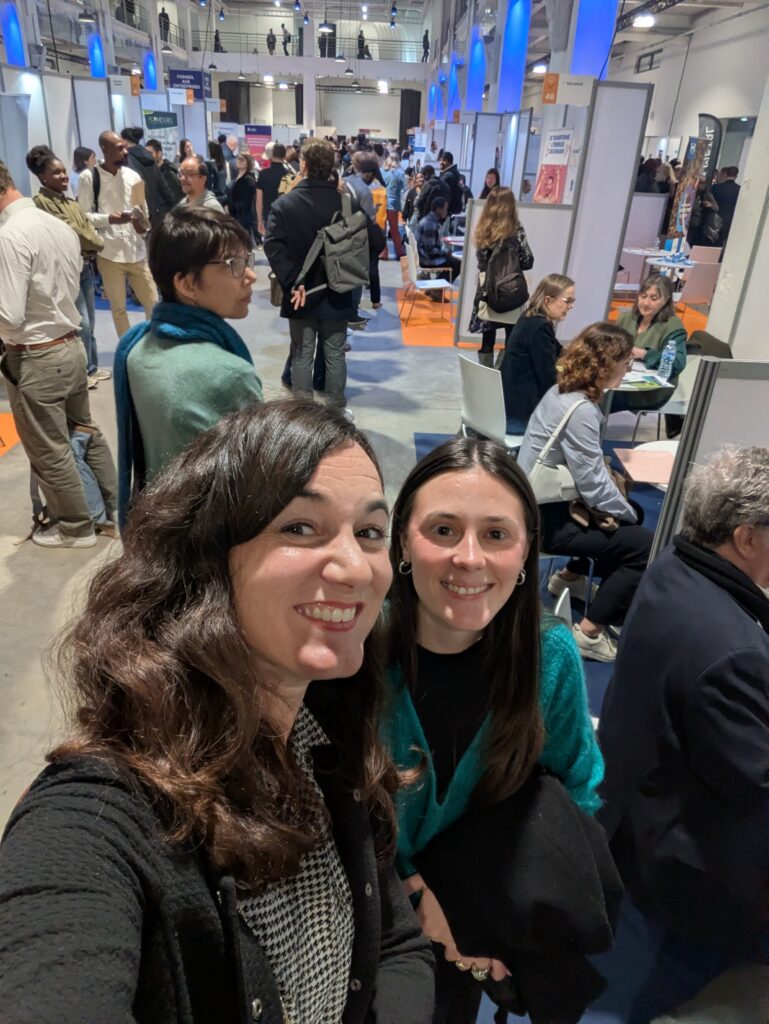
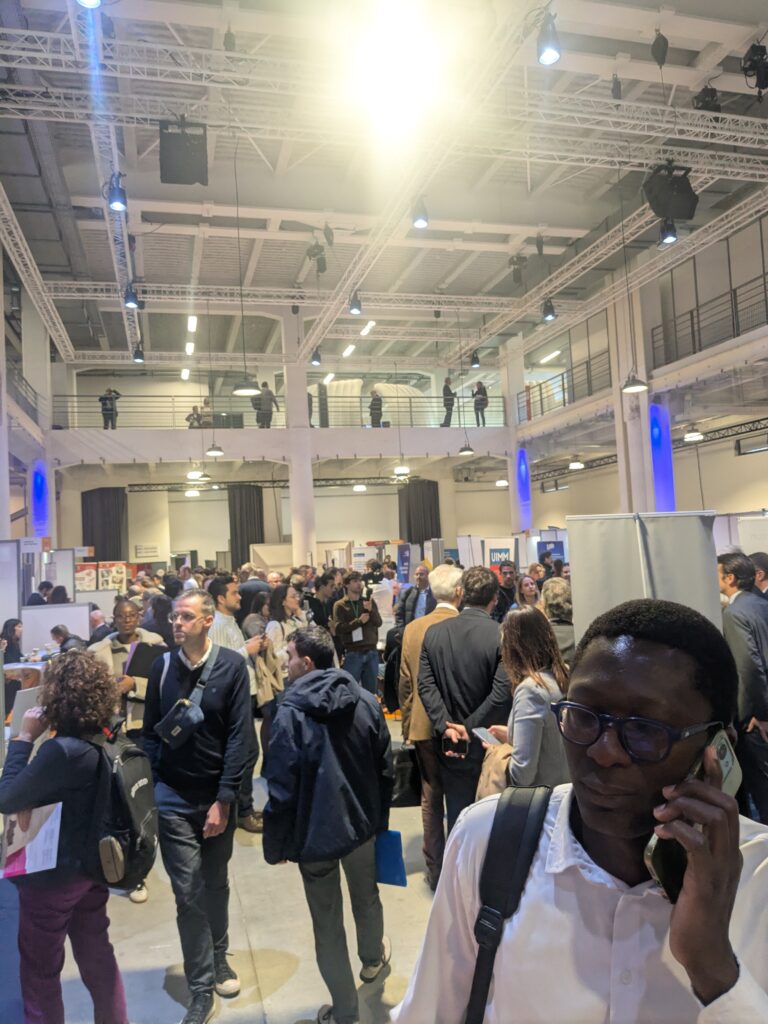
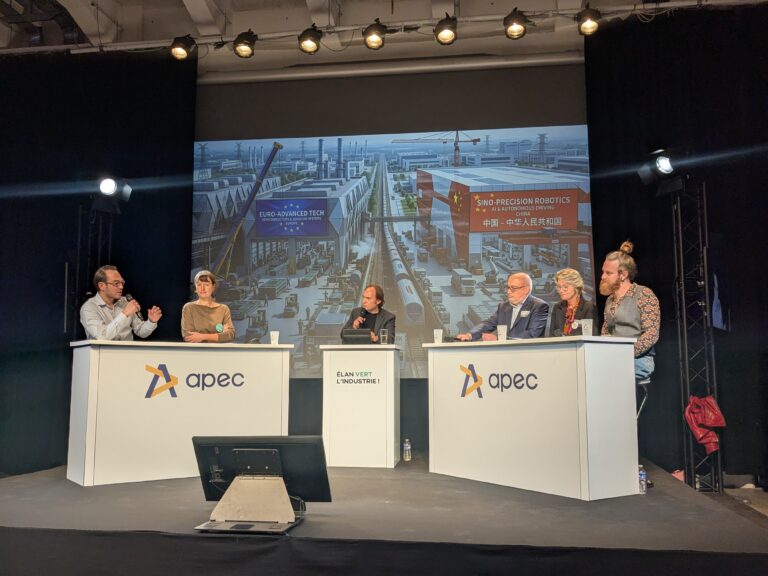
On 19 November, we attended the L’Élan Vert l’Industrie trade show in Lyon. Between meetings with manufacturers from the region, we attended a talk with an evocative title: “Competitiveness and industrial transformation… What if the first strategic resource were human?”.
Around the table were complementary perspectives: Thierry Regond and Romain Bertrand (Sunaero), Stéphanie Chervier (Apec Auvergne-Rhône-Alpes, the French association for executive employment), Caroline Felix (La Ruche Industrielle) and Aliocha Iordanoff (Sémawé). A manufacturer, an expert in executive employment, an industrial project facilitator and an organisational design specialist.
They shared the same starting point: industry suffers from a double deficit. First, an image deficit, which makes some jobs hard to promote and to make attractive. Second, a skills deficit, made worse by retirements and by the acceleration of technical change, with AI leading the way.
Faced with this double challenge, hiring more is not enough. Companies need to hire differently, onboard better and organise knowledge transfer. Three lessons from the talk illustrate this, and they reflect exactly how we work at INAUTALENT.
1. Clarify the need before writing the shopping list
What was said
When a role is hard to fill, the instinct is to pile on requirements: a specific degree, a set number of years of experience, a particular software, a given sector. Stéphanie Chervier, from Apec, encourages the opposite: separating what is truly essential from what can be learned.
She shared a telling example. A company was looking for a leather workshop manager. It ended up hiring someone from the construction sector, who had everything needed except knowledge of leather. To introduce them to the trade, the company organised an immersion before they started. The hire worked because the role matched a personal project of the candidate.
The lesson goes beyond this example: an overly long list of requirements does not protect you from a hiring mistake. Above all, it shrinks the pool of possible candidates and rules out people who would have succeeded.
How we do it at INAUTALENT
Every recruitment assignment starts with a scoping session with the founder or manager. We separate the criteria that are essential, those that are important and those that are simply nice to have. This has two concrete effects: it opens the search to profiles from other sectors, and it gives an objective basis for comparing candidates.
When the need itself is unclear (should you hire, train, or bring in an external provider?), we start further upstream. Our HR audit maps the company’s roadmap against its teams’ skills, to identify the real needs before opening a role.
2. Hire for the ability to learn, not just for skills
What was said
With AI, technical skills are changing faster and faster. For Aliocha Iordanoff, the mindset has to shift: focus on the ability to learn rather than on hiring based on skills alone, and create a company environment that encourages this learning.
At Sunaero, the principle is clear: they value motivation, and they train everyone. Caroline Felix reminded the audience that AI remains a tool. What matters is the teams’ ability to commit to the transformation, with the right to try and to make mistakes.
Another point raised during the talk: a rushed onboarding is often the first step towards a departure. Hiring someone for their ability to learn only makes sense if the company organises that learning from the very first weeks.
How we do it at INAUTALENT
A CV shows what someone has done. It says much less about how they learn, adapt and work with others. That is why we only present a candidate after an in-depth interview, a personality test and a check of their professional references. Together, these three perspectives let us assess a candidate’s trajectory, curiosity and way of working, beyond the skills they already have.
Our support does not end at signature. We follow up on every hire at key stages: the day after they start, halfway through the probation period, before the end of the probation period and three months after hiring. These check-ins help spot onboarding difficulties early and adjust before they lead to a departure.
3. Organise knowledge transfer before it is too late
What was said
Romain Bertrand (Sunaero) highlighted the demographic challenge: retirements take part of the industrial memory with them. Even with very thorough procedures and databases, tutorials are not enough. Passing on know-how takes people, pairing and teamwork.
This role largely falls to managers. Yet according to an Apec study, the share of non-managerial executives in France who want to take on management responsibilities fell from 42% to 34% between 2022 and 2025. The job is seen as more demanding. Managers need time, clarity on their role and support from leadership to pass on knowledge.
Aliocha Iordanoff also questioned the role of job descriptions. When they are too rigid, they lock people into a description that no longer reflects reality. Instead, he suggests describing the organisation in terms of roles and responsibilities, updated as needs evolve.
How we do it at INAUTALENT
On this topic, we step in in three ways, depending on the company’s situation.
- The HR audit provides an on-the-ground diagnosis of the organisation: roles, skills, dependence on a few experts, information flow. It leads to a prioritised action plan, which can include a plan for passing on critical know-how.
- The Dream Team Workshop brings a team together for two hours, after a personality test and a short preparation questionnaire. The team explores its working, management and conflict styles, clarifies who owns what and agrees on its priorities. It leaves with a team report and an HR action plan.
- Our Talent Partner model is designed for companies growing faster than their HR. We take on an operational HR function (HRIS, onboarding, performance management, advice), so that leadership and managers can focus on their teams and on knowledge transfer.
In short: which support for which need?
- You need to hire, but the role is hard to fill: our recruitment support, which starts by sorting out the essential criteria and continues with onboarding follow-up.
- You are not sure hiring is the right answer: the HR audit, to identify the real needs and choose between hiring, training or an external provider.
- Your team is growing fast and roles are getting blurred: the Dream Team Workshop, to clarify who owns what and agree on priorities.
- You have no HR team to keep up with your growth: the Talent Partner model, an operational HR function from day one.
Support 50% funded by Bpifrance
INAUTALENT is an approved expert for Bpifrance’s Diag Amorçage RH, a scheme run by France’s public investment bank to help young companies structure their HR. For innovative startups and SMEs registered in France (fewer than 250 employees and less than €5M in revenue), Bpifrance covers 50% of an engagement worth up to €10,000 excluding VAT. The assignment lasts 3 to 10 days, over a maximum of 4 months, and can cover mapping recruitment needs, sourcing processes, employer branding, management culture or compliance.
Not sure whether you are eligible? Write to us: we will check together in 20 minutes.
Hire better, not just more
The message of this talk echoes our own conviction: in industry as elsewhere, a good hire starts before the job ad and continues well after the contract is signed. Clarifying the need, assessing the ability to learn, organising onboarding and knowledge transfer: this is what makes the difference between a filled role and a successful hire.
Thank you to the speakers for the quality of the discussion, and to the organisers of L’Élan Vert l’Industrie for their welcome.
Preparing a hire or looking to structure your HR? Book a meeting with INAUTALENT